Shelley Neller contact details:
LIVING FOR WRITING/WRITING FOR LIVING * IN the 1950s and 60s, in the small Queensland town where I grew up, the standard household reading ran to the Readers Digest, the National Geographic and the Australian Women's Weekly. According to family accounts, I was uttering whole sentences by the end of my first year. My mother taught me the alphabet at four. From the moment I could read, she claims, my head was hardly ever out of a book. We had an account at Kelly's general store where I would buy mixed lollies with my own pennies of allowance, and book up the big stuff - the story books and blue-lined notebooks - on our family account. The latter I covered with my rounded, childish script, telling stories about slow, agonising deaths to cane toads (dousing with salt or hot water were my preferred methods) or about stumbling upon a massive carpet snake coiled up in a sunny corner of the verandah. I wrote accounts of what happened when pop, my grandfather, and I chased the King parrots out of his corn patch, and gave advice on how to make a nutritious nasturtium sandwich. My compositions questioning adult conundrums, such as why, in our local cemetery, the Catholics required a separate burial section from the Protestants in order to get in to heaven, were early indicators of my ambivalence about religious orthodoxy and my fascination with the ethereal realms and how to slip into them. When I was 10, we finally got television, but by then the reading and writing bug had already bitten deep and I continued to consume Little Women, Biggles, the Secret Seven and to write furtive love letters to the Rifleman, Bronco and Cheyenne, those masterful, gun-toting heroes of our childhood cathode tube. Gilligan's Island and The Addams Family came and went, but writing and reading endured as my prevailing passions. They were the source of so much fuel for my optimistic daydreaming, which was constantly projecting my skinny kid's frame put of those rural confines and hurling me far ahead into a fabulous, unblemished future, a glamorous, grown- up, globetrotting career. Books and writing contributed in another way, too. They nourished and validated my inner life which, in our average working-class family during that era in the Deep North, went utterly unacknowledged. Writing, I decided early on, would be my ticket out, and in the naivety and intensity of my youthful hopes and aspirations, I never once doubted that this would happen. Was there some pure strand of prescience in that bold self-prediction or did it simply reflect my sheer bloody-mindedness to make a life, an expansive, worldly life for myself, through my writing? Either way, it has come to pass that since leaving high school, writing of one kind or another, has proved to be my livelihood and my entree to some exotic and unlikely arenas. Journalism was what I had my young heart set on, and although my parents' impression of that profession was that it could make a girl a bit rough around the edges, they did not step on the toes of my fragile dream to have a writing life. When I was barely four weeks out of high school, my mother, bless her, spotted a tiny classified advertisement for a journalist on The Pine Rivers and Bribie Star. When I rang up, the proprietor said the position had already been filled. Devastated, I was about to hang up when something — and all these years later I can't begin to conject what it might have been — prompted her to invite me into the office to meet her. During my encounter with Marj, as I came to know her, once again something indefinable happened, something contrary to the established laws of nature. Call it a miracle if you care to. I do, for that tiny cash-strapped operation created a special, albeit lowly position, for me. From thin air or possibly from somewhere more suspect, my father conjured three hundred dollars and bought me an old Morris 1100 to drive to work, for there were no regular bus runs from our banana-growing hamlet. Six months later the little newspaper folded and when I failed to land a position anywhere in the metropolitan media, in desperation I wrote and applied for a job as a public relations trainee in McWhirters, an old- fashioned emporium in Fortitude Valley, at that time one of the least salubrious suburbs in Brisbane or possibly the western world. The office was dark, wood-panelled and windowless. Each evening I travelled home agonising that I would be sentenced to spending the rest of my life promoting the latest kitchen gadget or frilly frock. Despairing that I would ever get the opportunity to write, I would cry myself to sleep, feeling, incontrovertibly, that life without this personal expression, would not be worth living. But the McWhirters job, too, was one which the company had created especially for me and every Friday when I took home my twenty eight dollars, I reminded myself of this privilege and tried to be grateful. Mostly, though, I was impatient and anxious. What would my boss do if he found out I was using the office phone to call the women's editor of The Telegraph every second week, to ask, with all the dignity my seventeen-and-a-half years could muster, for a cadetship the minute one might become available? Three months later, that editor/ who even now, stands out in my recall as one of the most manipulative, misanthropic malcontents I have ever had the bad and good fortune to meet — did me one of the great favours of my life, and gave me a job. And life began to look immeasurably brighter. At last I'd made it into the main game in which one newspaper job led to another; one city's batch of yellowing clippings confirmed my credentials and carried me forward to the next. For a long time I loved chasing stories for the tabloids and broadsheets. Ink in the blood, as everyone said. I travelled a lot and wrote about matters that seemed moot or meaningful at the time. Over the years I reported from the battleship grey offices of News Limited's Fleet Street bureau, from the cocktail circuit of the Cannes Film Festival, from Lebanon during one of its invasions by Israel, from the Pret a Porter in Paris, from the blood-drenched site of the Granville train disaster, from moist and dusty racetracks in Dublin and Birdsville, from Sydney hospitals, Wrestpoint Casino, Darwin airport, the Great Barrier Reef; from film sets as far afield as Mataranka and Kalgoorlie, and from many geographic and topical points in between. My reporting ranged across the vacuities of Royal tours, the bullpit of State politics, the horror and senselessness of murders and road accidents, the havoc of flash floods and bush fires. My byline appeared on stories about gifted children, men with low libidos, business booms and bankruptcies. I brushed up against city socialites and suburban garbos. Hell's Angels and Hollywood film stars, political activists and advertising icons, aboriginal artists and freakish fashion photographers. One week I would tell a tragic tale about a boy with a terminal illness; the next Sunday I would write a puff piece about why brunettes have more fun. In many respects, journalism was, and is, the ultimate ticket to ride. For several years, I covered whichever stories were assigned me, but as I matured, I was granted more freedom to find and pursue my own feature articles. I chased fewer fire engines, for it was not front page leads that propelled me. It was the chance to ease the itch of curiosity about certain people and places, subcultures and significant events, to shine the ten-point spotlight on whoever or whatever exemplified the Zeitgeist or cried out for examination and illumination . I did not use a tape recorder. You can waste a lot of time recording and transcribing. Instead, I listened attentively and wrote down what seemed significant. Feature writing afforded what little leeway existed then to introduce "style" into reportage. Colorless understatement and invisible narration still reigned relatively supreme in the news room in those days, but at least you could note people's gesticulations, their quirks, beliefs, habits, idiosyncrasies, their clothes, home interiors, attitudes towards their spouses, children, workmates, their tones of voice, eye contact, etiquette and whatever other symbolic detail was evident. Symbolic of what, you might ask. Symbolic, as Tom Wolfe says, "of people's status life, using that term in the broad sense of the entire pattern of behaviour and possessions through which people express their position in the world or what they think it is or what they hope it to be. The recording of such details," Wolfe maintains, "is not mere embroidery in prose. It lies as close to the centre of power of realism as any other device in literature." Now I haven't written a piece of journalism since 1985 and I do not identify myself in that mould any more. But, to give credit where it is due, journalism forged a firm foundation of practical writing skills for me. It taught me how to research, investigate, ask the right questions, when to thrust myself forward and when to be a fly on the wall, when to prompt and when to shut up and wait for information to be offered. It tutored me in how to get the salient facts right, fast, for the first edition; how to write concisely, with restraint and structural discipline, how to work with clarity and grace under pressure, how to write to deadline; how to read between the lines of the most insidious propaganda, to sift the grains of truth from obfuscatory rhetoric and chest-beating polemic, to be wary of suck-up merchants, now matter how slick or sophisticated their spiel. It habituated me to be unimpressed by wealth, prestige, celebrity, charisma, position or authority, and regularly reinforced my awe at the influential power of the Fourth Estate. But eventually I tired of journalism's restrictive format and looked around for a new writing vehicle to speed me through the inner-urban world. It was the eighties and everyone seemed on a roll, so I blurred my bankcard out to its limit and started a public relations company in the spare bedroom of my apartment. Next thing I knew I was dressed up to the pencil-skirted nines, pitching for business accounts and writing snappy corporate copy in order to acquire — a downtown business address, five fulltime staff, residential real estate, state-of- the-art software, silk dresses, kilim rugs and other consolatory prizes. I wrote copy for publishers of books and magazines, for film producers and TV networks, for theatrical entrepreneurs, ragtraders, real estate agents, art galleries, medical fraternities, restaurateurs, technology providers, government departments, hotel chains, holiday resorts... In the landscape of the imagination, this writing phase was no pinnacle. It did not thrust up the creative peaks of opportunity to which the writer in me yearned to ascend. Still, I am at heart a pragmatist and I give thanks that during those hectic, high-powered years, my writing, undistinguished and tradesmanlike as it was required to be, offered substantial support to my long-range goals, which had grown to be: to quit the city, to live closer to the land, to buy time to find out who I was when I wasn't struck on the commercial treadmill and to discover what my real writing might be. Seen in its true light, every experience in life is a preparation for something else later on, and PR was no exception. As a journo, I had been a selective buyer of information for public broadcast; now I was a peddler of products and services to the media powers-that-be, and once my ego recovered from this switch in status, I soon wised up about the effectiveness of teamwork and serving others, notably my clients. Working in PR cultivated my empathy, diplomacy and humility. It honed my ability to listen, discern, strategise and recommend specific courses of activity; it reinforced my attention to detail to ensure that every job, no matter how tedious, got done well. One day during the late eighties, craving yet another one of the multiple career incarnations to which we Baby Boomers feel entitled by divine decree, I checked on my savings account, gathered up my courage and called my clients. "Sorry," I said, "but I'll be out to lunch — for at least a year." The time had arrived for me to write books. About what I had no idea until, one lunchtime when I was propped up in bed drinking tea, eating lamingtons and reading an anorexic-sized book entitled Why Do I Think I'm Nothing Without A Man?, the phone rang. It was a former client, a publisher wondering whether I'd be interested in co-authoring a book about co-dependency. Quite frankly I was in two minds about it — yes and YES! I had peeled off my pyjamas and booted up the word processor before you could say Author! Author! Over the next several years I wrote and co-wrote three more books of non-fiction ranging across personal development, interior design and biography. Those books were all grist for the writing mill, and the experience of conceiving and presenting them to the prospective publishers, negotiating the deals and doing the hard work to produce them, impressed upon me some new and hard-won lessons, not the least of which was the need to stand firm for the fulfillment of contractual obligations, no matter how devious or heavy-handed the publisher might get. Now here is the tough truth about books: unless you write a string of number-one best-sellers, you will not create for yourself a life of superannuated ease. If you are lucky, you will cover the household rates and the car rego. So I have remained obliged to dip into the well- paid pool of PR work to keep the wolf, or (this region being a frontier of high unemployment) the case manager, from the door. In addition, I have edited other people's work, a task whose remuneration is a grand insult to intelligence and expertise and one which, in my experience with certain authors, requires rigorous restructuring and wholesale feminist cleansing. I'm happy to announce I have renounced editing, forever amen ... One of the great reassuring constants, or cliches, depending on your viewpoint, is that our lives have a habit of travelling full circle. Living in Byron Bay these last several years, I've been fortunate enough to utilise PR writing to earn the money to buy time. And in the time that I have bought I've found my "real writing", such as it is, being inspired and steered once more by the navigational stars of the natural world. So here I am in my mid-life hanging out in the garden, in the rainforests, on the beaches, hooked — line and sinker — on Nature as my main Muse. As the Irish poet Louis McNeice put it, "the earth compels." By the sea, for instance, I find that my apprehension becomes looser, more porous, soaking up new ideas and fresh impressions borne to me on the tides or the smell of the surf. Everyday artifice evaporates, allowing something more interesting to surface. In the cathedral of a rainforest, hearing the euphony of birdsong above and the soft crunch of moist leaf-mulch underfoot, I begin to tune in to a frequency which transmits the enduring natural symbols, the acute and universal insights that reside deep down in me, as they do in each one of us. I am still interested in chronicling events, especially in the synoptic charting of apparently chance events in the long-range weathering of our lives. But I perceive and write about them differently now. I am still fascinated by symbols, by the way in which ideas manifest in matter, by the way in which they reveal aspects of truth and reality. But I no longer chase them the way I did to produce the quick copy of earlier years. Instead, I take a more receptive approach. I hole up in this easterly heartland and wait, for the landscape, the birds, the weather and other gods to bestow on me their inspirational gifts — the ordinary, the sublime, the poignant or the unexpected. This can be a dicey, nerve-wracking process, for the gods can sorely test mortal patience and trust. But if I do wait, not passively, but with relaxed alertness and mindful spontaneity, the writing slowly comes into being like an old-fashioned daguerreotype. The images gradually impress themselves on the sensitised silver of my senses; the ideas develop themselves in the mercury vapour of my imagination. This writing takes considerably longer to materialise than the quick Polaroid snaps of my journalism days, but it's the best way for me to freeze-frame in text not only the pictures and stories, but also the stories behind the stories that foster meaning in our lives. Like so many writers, I write in an attempt to understand life, to make sense of its random incidents and serendipities, its unpredictable nose-dives and crazy U-turns. In my plain pink office, I half-draw the blind, I sit at my old brown desk and painstakingly pluck the words from the ether. For hours, or in what seems a twinkling, depending on my consciousness that day, I arrange and pedantically rearrange them on the page. Sometimes I am mortified at how they mirror back to me the dark edges of my psyche and sometimes I break into a cackle of surprise at the scope of my own knowing. As E. M Forster said: "How do I know what I think until I see what I say?" Just as in my innocent girlhood, I find myself writing essays. An essay, according to the dictionary is a short literary composition dealing with a subject analytically or speculatively; an attempt or endeavour or effort. In my case, essays are attempts to fashion some deeper perceptions and experiences into forms which I hope the reader will recognise and identify with or at least find engaging. As for the act of writing, that can be an incredibly varied experience. It can be vexing or vainglorious, violent or voracious. It can be as dreary as any other daily grind. However, once your creative juices start flowing, it can spill over into veneration, transcendence, ecstasy. On a grand day, it can be an unadulteratedly occult experience. And the act of living? Well I'm a great believer that the way I choose to engage with life makes its mark on my writing as surely as words, those pegs on which I hang ideas, those dark, mysterious marks of living language I put on paper, shape the days of my life, my lifestyle, my livelihood. Finally, I hope you like parables. I have one I want to share with you. On a recent visit to Sydney, I called into Cadry's Oriental and Persian Carpets at Edgecliff and ended up, as I always do, drinking strong tea, eating fine lindt chocolates and yarning at length with Jacques Cadry. Mr Cadry to me. Over the years I've acquired a number of rugs from Mr Cadry, a quietly-spoken, Persian-born man to whom I respond warmly, respectfully, and increasingly flirtatiously, I notice, as he approaches his 90th year. In Mr Cadry's Aladdin's cave every available speck of space, horizontal and vertical, is bedizened in the most luxuriant and eye-pleasing array of rugs. Customers tread narrow paths among ochre and ruddy hillocks of them searching for the perfect one for their decor and budget. To assist their quest, one or two of Mr Cadry's staff stand by to peel back the woven layers one by one, to reveal rugs characterised by rich colors, flowing or geometric designs, rugs that are pale, refined and elegant, rugs more sophisticated and formal, and as such, excellent examples of the weaver's art at its most elevated. However, most of the rugs in the shop are, as Mr Cadry points out, the bright, naive, and often anonymous products of village and tribal weavers. They are folkloric and spontaneous and no less charming for that. Downstairs, lying in a locked vault is my favourite, the Gallipoli Rug. The antithesis of ostentation, it is a pleasing co-mingling of gentle browns, greens and beiges which charmingly evoke the Turkish coastline on the Gallipoli Peninsula. In this rare silk rug, the use of colour is extraordinary. The hues "coincide with those frequently used on topographic relief maps" and the weaver has achieved "the almost impossible feat of combining map-like realism with a lively impressionistic" rendering of the Turkish countryside. For its intricate design, its subtle shadings, the patina of its gracefully ageing lifetime, I love this woven masterpiece. But when I stand back to appraise it, I do not distinguish these separate elements. Neither do I dwell on the rug's dizzying price tag. Instead, as Mr Cadry's fine-boned hands carefully unfurl it atop a carpet stack as high as my hip, I sharply draw in my breath and release a long sigh of admiration at its overall beauty. I bend my torso and brush my cheek and my palms against its undulant softness. This Istanbul rug, which measures approximately one-by-one-and-a- half-metres, has a knot count of 20 horizontal and 22 vertical, a warp of fine silk two-ply and a weft of fine silk. As Mr Cadry explains, the yarns arranged vertically on a loom form the warp threads through which the weft yarns are woven horizontally between the knots. The Gallipoli rug, like all the rugs in that colorful kasbah and, like all writers' lives and work, are woven histories. Stories, experiences, perceptions, events, real or imagined, present, historical or mythical, are dexterously dyed and threaded into the complex tapestries of writing/living, living/writing. Spinning, twisting, plying, knotting, weaving over and under, layer by layer, day by day, consciously and unconsciously, they build up and burst forth as highly-charged symbols of our outer and inner realities. Some of the motifs may move us to laughter or tears; they may challenge and disturb our root assumptions, our core beliefs about the physical world in which we live. Others may represent inner knowledge, the slivers of wisdom such as are transmitted through dreams, those "animated postcards" we mail back from journeys we have taken but mostly forgotten. When I run a reflective eye over the warp and weft of my own personal history, I see that in the slubby fabric of my living for writing and writing for living I have borrowed money, gone bush, bought real estate, retreated into solitude, and lived in foreign countries. I have fallen madly in love — more than once — collapsed from RSI, tithed my income, feng shuied my house and learned to meditate, not necessarily in that order. Standing in the cool vault beside Mr Cadry, I marvel that intermittent viewings of the Gallipoli rug over the years have not diminished its magic appeal for me. If anything, the more I see it, the more I am seduced — not only by its silken stillness, but also by whatever it is that lies under the fine pile of its pale mystery. In the dim light, I turn my appreciative face to Mr Cadry who smiles and nods knowingly. The price tag, he shrugs, is purely hypothetical, for he has no intention of allowing the Gallipoli rug to leave his family's conspicuous citadel of carpets. Like the Gallipoli rug, fine writing possesses a kind of "stored magic," some of it so potent that the writing endures and affects readers for centuries after the author's passing. What is the source of the writing's creative power? Is it substance? Or insight? Is it intellect, style or technique? It is none of these, according to the English poet Robert Graves. It is inspiration. And inspiration in its essence involves the simple act of inhaling. And so a writer inhales the lifeforce, and then exhales it, breath by breath, word by word, weaving them into simple or not-so-simple patterns of language, punctuation and syntax; threading in ideas, opinions, fanciful conceits, acerbic one-liners, healing imagery, heart- breaking plot points... This word-weaving, this enigmatic shifting of elemental energy through the dimensions, offers a multitude of ways to present, celebrate, lament, interpret or imagine life. Back in the rug shop, Mr Cadry, in his compelling sotto vocé, is telling me: "Remember, Shelley: no two carpets are identical and every one is a work of art." Yes, but is the art in the weaving or in the weaver? Or both? And why would you want to sever the synergistic vitality of the two, for, as Wordsworth has written: "We murder to dissect." *This is a transcription of a talk given by Shelley in September 1998 at an Inspirational Evening Celebrating Adult Learner's Week organised by Adult Community Education, Mullumbimby.
Thanks for visiting my site. I hope you enjoyed it. If you have any comments regarding my writing, please feel free to email me. You might also like to check out other people's remarks.
Shelley Neller contact details: |
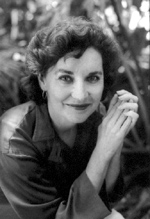 Shelley Neller grew up in Dayboro, Queensland. She did her journalism
cadetship with Queensland Newspapers, Brisbane. In 1975-76 she worked
in News Limited's London bureau, before moving to Sydney where she
worked for several newspapers including The Australian, The Daily
Telegraph and Sunday Telegraph. As a freelancer, her writing has
appeared in The National Times, The Bulletin and various national
magazines. In 1984 she established her own public relations company which
served a broad corporate clientele. She has co-written three non-fiction
books (Set Yourself Free, Free to Be Me and The Home Show) and
edited several others. In 1992 she relocated to Byron Bay.
Shelley Neller grew up in Dayboro, Queensland. She did her journalism
cadetship with Queensland Newspapers, Brisbane. In 1975-76 she worked
in News Limited's London bureau, before moving to Sydney where she
worked for several newspapers including The Australian, The Daily
Telegraph and Sunday Telegraph. As a freelancer, her writing has
appeared in The National Times, The Bulletin and various national
magazines. In 1984 she established her own public relations company which
served a broad corporate clientele. She has co-written three non-fiction
books (Set Yourself Free, Free to Be Me and The Home Show) and
edited several others. In 1992 she relocated to Byron Bay.